



Episode #1076
News Items
- Gene That Provides Resistance for Bananas
- Drug Advertising
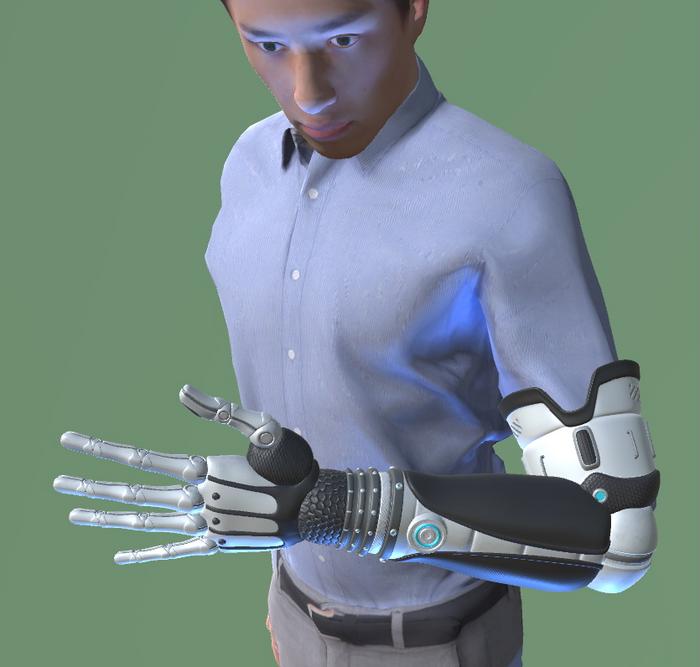
- AI Powered Prosthetics
- Laser Written Glass Storage
- UFO Balloons
Question #1: Mental Illness and Culpability
- Hey y’all. Since there is both a neurologist and a psychologist on the show, I figured you would be a good place to ask this. If you didn’t see the entertainment news, Kanye West recently put out an open letter apologizing for his past behavior and explaining it as a manifestation of untreated bipolar disorder. This opened up a chain of comments on Reddit dismissing it by saying “bigotry is learned, it’s not a side effect of mental illness”. Others would try to explain that they witnessed people in their own lives slip into destructive chains of thought due to mental illnesses like bipolar disorder. A similar thing happens when it comes to dementia or drug/alcohol intoxication. People say things like “alcohol only reveals a person’s true thoughts”, as if it’s some kind of truth serum. People with dementia can suffer dramatic personality changes, including developing bigoted views they never held before, at least openly. I feel like this idea is misguided. My understanding of modern neuropsychology is that we are ALL awash with intrusive thoughts or flashes of ideas that go against our values, but those with a healthy mind and psyche are able to quash them before they take root, sometimes before we’re even aware of them. And yes, while disinhibition can sometimes reveal thoughts we hold true but seek to suppress, I feel like there’s a point where it’s just plain delusion and not an automatic representation of who we are and what we stand for. What are your thoughts on this? I imagine the full explanation is complex and situational, and I’d love to hear more. Derick
Name That Logical Fallacy
I’ve been listening to the show for about 7 years, this is my first time writing in! Your discussion of motivated reasoning last week reminded me of a situation I found myself in a while ago, and I’d be interested to hear an experienced skeptic’s take on it. I was playing a game of cribbage with my sister, and a situation arose where the rules were unclear, and a ‘discussion’ broke out about whether or not I had legally scored two points. The details are unimportant, but the discussion took an interesting turn, and I’m wondering about which particular fallacy was at play, if one was even present at all. The discussion proceeded as follows: I laid out my arguments, then my sister laid out hers, then several bystanders (who were functioning as a makeshift jury) contributed opinions. The crux of the discussion came when my mother declared that if roles were reversed, I would be arguing for the other side. I admitted that yes, I was indeed playing lawyer. Because of my admission, the jury declared my reasoning invalid, and ruled in my sister’s favor. Clearly, both my sister and I could be accused of motivated reasoning, but I’m more interested in which fallacy the jury committed. It seems to me that the jury cannot rightfully dismiss an argument solely due to the fact that it came from a biased source. Having a biased source should be a warning flag to apply extra scrutiny, but the argument still ought to be ultimately judged on its merits. My best guess is that this is some sort of ad hominem? Anyway, love the show, thank you for all that you do! Best, Hendrik
Science or Fiction
-
Item #1
Science
A new study finds that living at high altitude significantly reduces the risk for diabetes. https://www.sciencedirect.com/science/article/pii/S1550413126000185
-
Item #2
Fiction
Researchers demonstrate that mouse-derived brain organoids are able to learn and remember tasks often used to train AI, using reinforcement learning. https://www.cell.com/cell-reports/fulltext/S2211-1247(26)00062-8
-
Item #3
Science
A recent review of research finds that animal behavior, such as vigilance and foraging, has a variable response to interactions with humans, with fear-driven behavior increasing, changing little, or even decreasing. https://onlinelibrary.wiley.com/doi/epdf/10.1111/ele.70287
Skeptical Quote of the Week.
‘Astrology is a disease, not a science. It is a tree under the shadow of which all sorts of superstitions thrive. Only fools and charlatans lend value to it.’ Rabbi Moses Ben Maimon Maimonides (1138–1204), philosopher, jurist, and physician of the Middle Ages, authored ten influential medical works covering topics like asthma, diabetes, and hygiene. A practitioner of the ‘natural sciences’ who championed empirical observation over blind reliance on ancient authority.